My wife asked me, her preferred human interface to AI, to rerun our retirement plan. “What if AI cures cancer and we both live past 100?”
Apparently, I’ll be working into my 90s. Perhaps the AI understands my enthusiasm for work better than I’m prepared to admit.
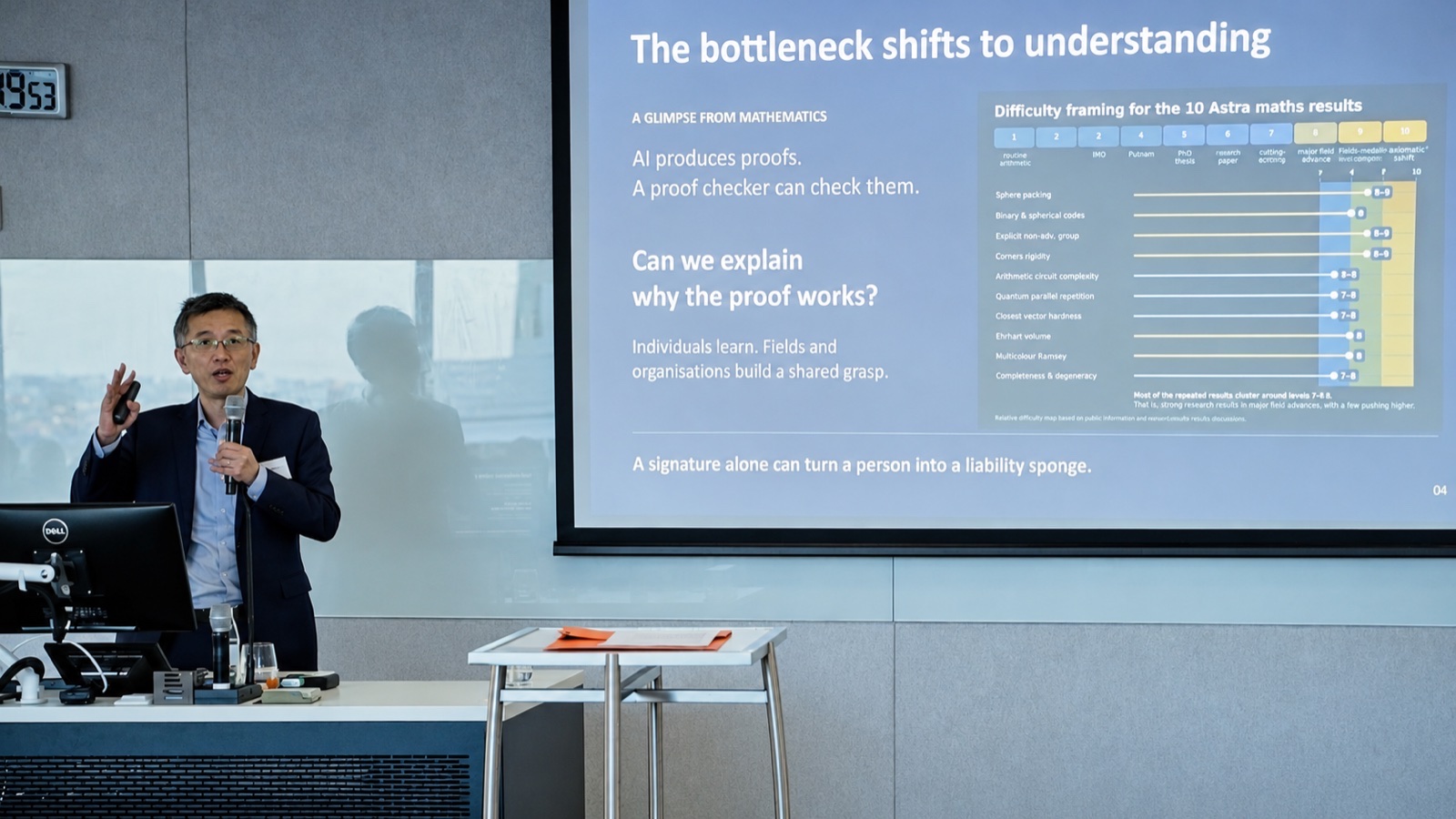
That was my keynote opening for “The Future of Finance: When AI Starts Acting on Our Behalf” at the 11th FinTech & Banking Awards on Tuesday.
I deliberately stepped away from the long list of AI use cases and the debate about which mistakes humans will always be better at catching. I wanted to explore an enduring human role as agents become more capable.
Whether we are customers, finance professionals or institutions deploying agents, understanding matters even when the answer is correct.
An agent can come up with an excellent retirement plan. Seeing its implications helps us discover what we actually want. A professional can receive a sound recommendation and develop a better question by exploring its assumptions. An institution needs enough understanding to explain and take accountability for the AI they use or deploy.
This requires deliberate system design. Can people challenge consequential assumptions, test alternatives and try selected parts of the work themselves? Can they build on the understanding and assurance already established by others for the system when examining a particular case?
Different people need different depths of understanding. Customers need to grasp the implications of their choices. Technical specialists and deploying institutions need evidence about system behaviour, its limits and where reliance is justified.
These questions are central to our work at CSIRO on Understanding-First AI Engineering (paper: Understanding-First AI Engineering). I’d welcome conversations with partners interested in building and testing these approaches with us.
I see a bright future in AI understanding us better while helping us understand AI and more. Curiosity, pride in mastery and responsibility for our choices are deeply human. As AI expands what we can do, we can design it to deepen our understanding of what is possible, what matters to us and what we choose together.
Keynote slides
Leave a Reply