Every confidential message you’ve sent may already be stored — waiting to be unlocked. This is the essence of the “𝗵𝗮𝗿𝘃𝗲𝘀𝘁-𝗻𝗼𝘄, 𝗱𝗲𝗰𝗿𝘆𝗽𝘁-𝗹𝗮𝘁𝗲𝗿” problem: data intercepted today could be decrypted once quantum computers mature.
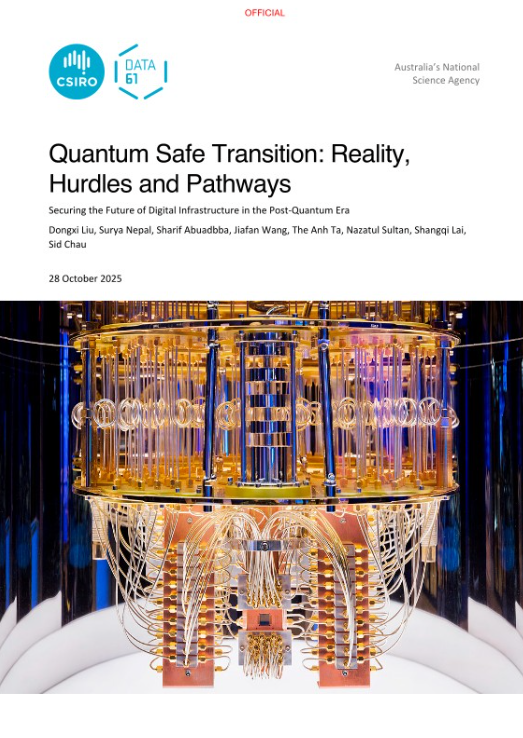
This week CSIRO’s Data61 released our new report, 𝙌𝙪𝙖𝙣𝙩𝙪𝙢 𝙎𝙖𝙛𝙚 𝙏𝙧𝙖𝙣𝙨𝙞𝙩𝙞𝙤𝙣: 𝙍𝙚𝙖𝙡𝙞𝙩𝙮, 𝙃𝙪𝙧𝙙𝙡𝙚𝙨 𝙖𝙣𝙙 𝙋𝙖𝙩𝙝𝙬𝙖𝙮𝙨, mapping the scale of the challenge and outlining practical steps for governments and businesses to act now.
Across your organisation and Australia’s critical digital infrastructure, cryptographic libraries are embedded everywhere: in cameras, phones, routers, cloud servers, and enterprise systems. Few organisations know where they all are. Even with the rollout of “quantum-resistant” algorithms, vulnerabilities will keep emerging as technology evolves.
Our report explains how to move from static defences to crypto-agile systems that can discover, adapt, and modernise encryption dynamically. It also highlights how AI can support cryptographic asset discovery and hybrid defences that bridge classical and quantum-safe security.
These same capabilities are increasingly critical as AI systems themselves become part of the encryption landscape — where sensitive data is accessed, processed, and sometimes retained during inference. Managing quantum-resistant cryptography within AI workflows and ensuring that powerful AI systems only access data securely and verifiably will be a defining challenge for both cyber and quantum resilience in the years ahead.
𝙏𝙝𝙚 𝙢𝙚𝙨𝙨𝙖𝙜𝙚 𝙞𝙨 𝙨𝙞𝙢𝙥𝙡𝙚: 𝙩𝙝𝙚 𝙥𝙤𝙨𝙩-𝙦𝙪𝙖𝙣𝙩𝙪𝙢 𝙚𝙧𝙖 𝙝𝙖𝙨 𝙖𝙡𝙧𝙚𝙖𝙙𝙮 𝙗𝙚𝙜𝙪𝙣. 𝙏𝙝𝙚 𝙤𝙣𝙡𝙮 𝙨𝙖𝙛𝙚 𝙩𝙞𝙢𝙚 𝙩𝙤 𝙗𝙪𝙞𝙡𝙙 𝙘𝙧𝙮𝙥𝙩𝙤 𝙖𝙜𝙞𝙡𝙞𝙩𝙮 — 𝙞𝙨 𝙣𝙤𝙬. 𝙃𝙤𝙬 𝙧𝙚𝙖𝙙𝙮 𝙞𝙨 𝙮𝙤𝙪𝙧 𝙤𝙧𝙜𝙖𝙣𝙞𝙨𝙖𝙩𝙞𝙤𝙣 𝙩𝙤 𝙛𝙞𝙣𝙙 𝙖𝙣𝙙 𝙛𝙞𝙭 𝙬𝙝𝙖𝙩 𝙞𝙩 𝙘𝙖𝙣’𝙩 𝙮𝙚𝙩 𝙨𝙚𝙚?
About Me

Director/Head of CSIRO’s Data61
Conjoint Professor, CSE UNSW
For other roles, see LinkedIn & Professional activities.
If you’d like to invite me to give a talk, please see here & email liming.zhu@data61.csiro.au