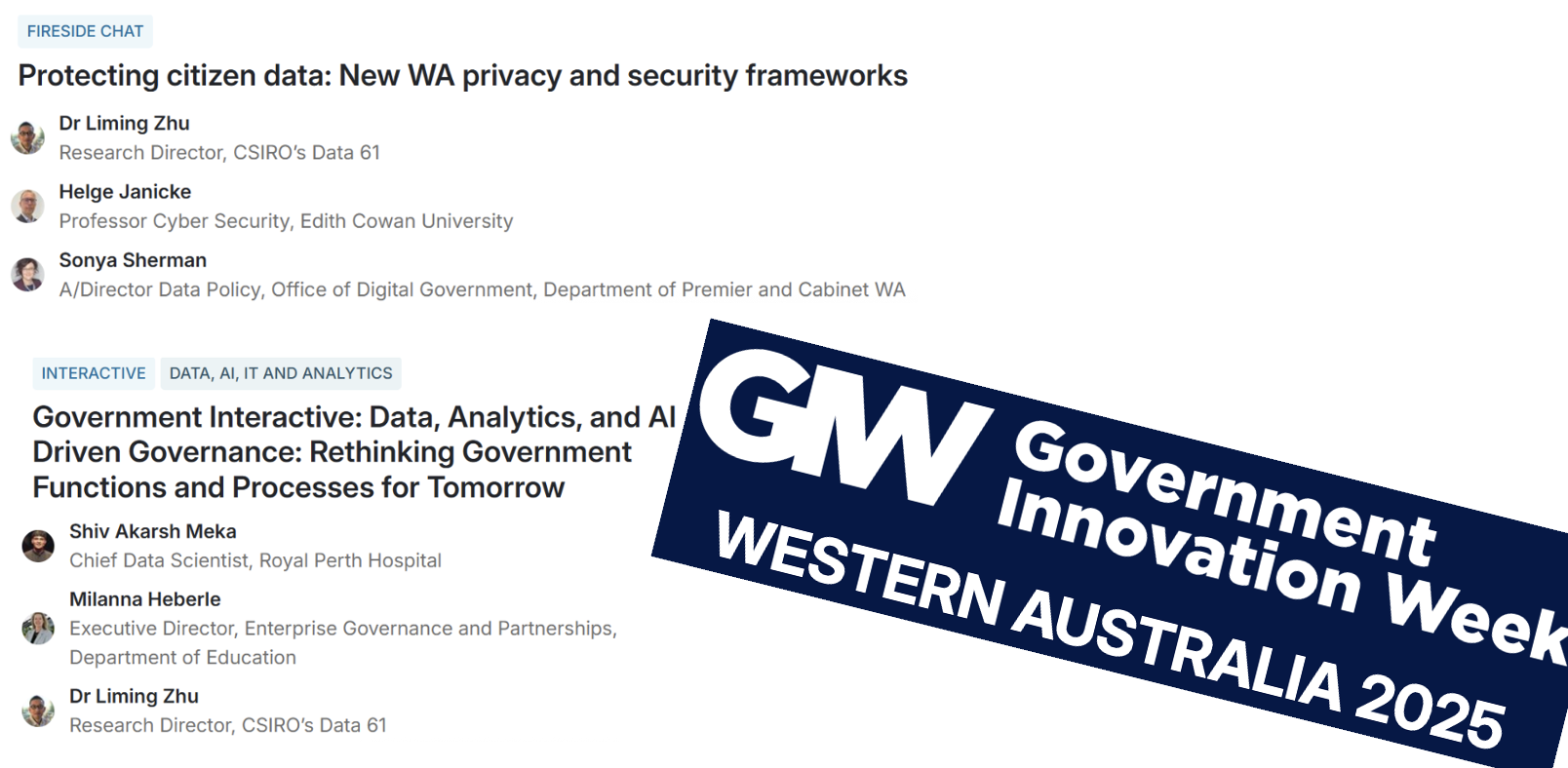
I was glad to join the 𝗪𝗲𝘀𝘁𝗲𝗿𝗻 𝗔𝘂𝘀𝘁𝗿𝗮𝗹𝗶𝗮𝗻 𝗚𝗼𝘃𝗲𝗿𝗻𝗺𝗲𝗻𝘁’𝘀 𝗜𝗻𝗻𝗼𝘃𝗮𝘁𝗶𝗼𝗻 𝗪𝗲𝗲𝗸, contributing to discussions on both AI and cyber. The event was buzzing with energy, sharp questions, and concrete use cases being shared.
On cybersecurity, my key messages were:
1. You don’t need to copy-share data everywhere—doing so only increases the attack surface. Analytics and compute can be moved to the data, with 𝗼𝗻𝗹𝘆 𝗶𝗻𝘀𝗶𝗴𝗵𝘁𝘀 𝘀𝗵𝗮𝗿𝗲𝗱 𝗯𝗮𝗰𝗸.
2. New techniques allow us to inject noise or treat data so they can only be used for intended purposes, 𝗽𝗿𝗲𝘃𝗲𝗻𝘁𝗶𝗻𝗴 𝘂𝗻𝗮𝘂𝘁𝗵𝗼𝗿𝗶𝘀𝗲𝗱 𝘂𝘀𝗲/𝗔𝗜 𝗹𝗲𝗮𝗿𝗻𝗶𝗻𝗴.
3. Co-pilots, with their access to enterprise data and internal tools, introduce a new class of threats that 𝗿𝗲𝗾𝘂𝗶𝗿𝗲 𝗻𝗲𝘄 𝗺𝗶𝘁𝗶𝗴𝗮𝘁𝗶𝗼𝗻 𝘁𝗲𝗰𝗵𝗻𝗶𝗾𝘂𝗲𝘀.
On AI, I continue to focus on CSIRO’s Data61‘s work in 𝗵𝘂𝗺𝗮𝗻 𝗼𝘃𝗲𝗿𝘀𝗶𝗴𝗵𝘁 𝗱𝗲𝘀𝗶𝗴𝗻—not just catching mistakes, but treating oversight as 𝗮 𝗳𝘂𝘁𝘂𝗿𝗲 𝗷𝗼𝗯 𝗮𝗻𝗱 𝗮 𝗹𝗲𝗮𝗿𝗻𝗶𝗻𝗴 𝗼𝗽𝗽𝗼𝗿𝘁𝘂𝗻𝗶𝘁𝘆. The design of oversight is proving critical. For example:
• In one recent study, during an unexpected AI outage in a call centre, staff who had been using AI for months actually 𝗽𝗲𝗿𝗳𝗼𝗿𝗺𝗲𝗱 𝗯𝗲𝘁𝘁𝗲𝗿 than those who hadn’t, because the system was designed to enhance human learning during oversight.
• In another recent study, doctors engaged in rubber-stamping oversight saw their skills 𝗱𝗲𝘁𝗲𝗿𝗶𝗼𝗿𝗮𝘁𝗲 𝘀𝗶𝗴𝗻𝗶𝗳𝗶𝗰𝗮𝗻𝘁𝗹𝘆 after only three months, showing the risks of poorly designed oversight.
AI and cyber are converging areas where the design choices we make today will directly shape resilience, capability, and human expertise tomorrow.