𝗪𝗵𝗮𝘁 𝗶𝗳 𝘄𝗲’𝘃𝗲 𝗯𝗲𝗲𝗻 𝗰𝗮𝘁𝗲𝗴𝗼𝗿𝗶𝘀𝗶𝗻𝗴 𝗚𝗲𝗻𝗲𝗿𝗮𝗹 𝗣𝘂𝗿𝗽𝗼𝘀𝗲 𝗔𝗜 (𝗚𝗣𝗔𝗜) 𝘁𝗵𝗲 𝘄𝗿𝗼𝗻𝗴 𝘄𝗮𝘆?
• What if it isn’t just another “general-purpose technology” like computing, but a bundle of many specific-purpose technologies out-of-the-box?
• And what if calling AI a “capital investment” is also a category error—when in reality it behaves more like inexpensive labour?
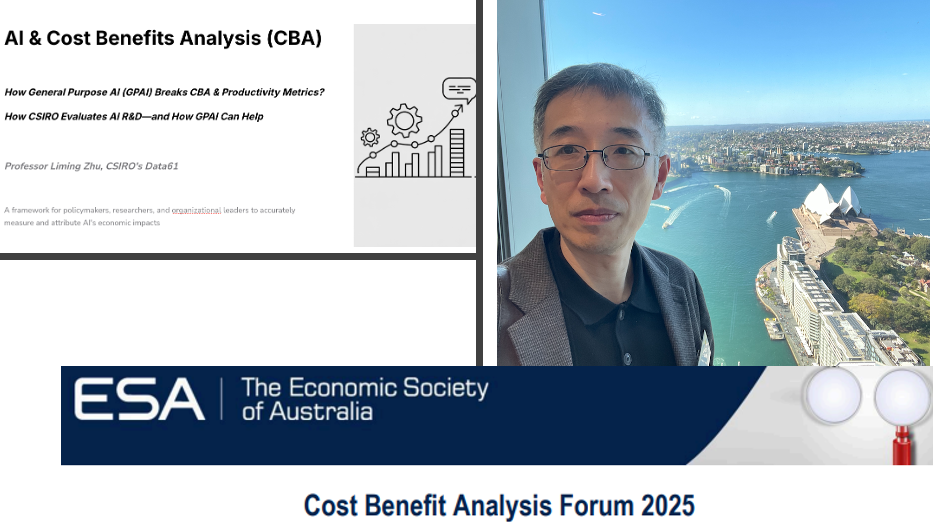
Yesterday at the Cost-Benefit Analysis Forum organised by the Economic Society of Australia (NSW), I offered a small technical perspective on the long-running productivity paradox. Many leading economists have addressed it far more deeply; my contribution was simply to show how GPAI’s unique properties complicate familiar frameworks—from project-level cost–benefit analysis to firm productivity and national accounts. Unlike electricity or computing, GPAI:
• delivers 𝗼𝘂𝘁-𝗼𝗳-𝘁𝗵𝗲-𝗯𝗼𝘅 𝘀𝗽𝗲𝗰𝗶𝗳𝗶𝗰-𝗽𝘂𝗿𝗽𝗼𝘀𝗲 𝗰𝗮𝗽𝗮𝗯𝗶𝗹𝗶𝘁𝘆 and even “𝗜𝗻𝘃𝗲𝗻𝘁𝗶𝗼𝗻𝘀 𝗼𝗳 𝗺𝗲𝘁𝗵𝗼𝗱𝘀 𝗼𝗳 𝗶𝗻𝘃𝗲𝗻𝘁𝗶𝗼𝗻𝘀 (𝗜𝗠𝗜)”
• drives 𝘀𝗵𝗮𝗱𝗼𝘄 𝗮𝗱𝗼𝗽𝘁𝗶𝗼𝗻 outside formal programs
• 𝗰𝗼𝗹𝗹𝗮𝗽𝘀𝗲𝘀 𝗲𝗻𝘁𝗶𝗿𝗲 𝘄𝗼𝗿𝗸𝗳𝗹𝗼𝘄𝘀 into single and longer steps
• blurs the line between labour and capital
• Usage and inference costs—and even seemingly large capital investment in model training—may be overestimated if divided by the many powerful specific-purpose capabilities
These shifts mean productivity gains are often misattributed, undercounted, or show up only as “mysterious” residual uplifts, total factor productivity, or multifactor productivity.
I also shared how CSIRO’s Data61 approaches this challenge:
• Using impact evaluation frameworks designed for high-uncertainty R&D with delayed and diffuse benefits
• Developing new risk assessment methodologies and a science of measurement tailored for GPAI
• Applying AI itself to enhance cost–benefit analysis, from scoping and precedent extraction to tracing impacts, collating risk evidence, and synthesising reports
The day closed with a lively panel on whether AI can be trusted within cost–benefit analysis itself. The mix of economic, policy, and technical perspectives reinforced why I value multidisciplinary forums—they generate insights no single field can reach alone.
text-rich full slides https://gamma.app/docs/AI-Cost-Benefits-Analysis-CBA-bmch54uelzzzpy8